Steeped in nostalgia, Christmas is a time for embracing much-loved traditions. Though your classic Christmas may look a little different to another’s, there are a few festive favourites that we all come to rely on time and time again and they can often be found in the world of flowers and plants. A traditional fir tree, a festive wreath, a sprig of mistletoe or a garland of holly and ivy are decorations we look to year after year, acting as symbols that the festive season has once again begun. But what makes these seasonal treats so typically Christmassy and, for an event so steeped in sentiment, what messages can they bring? Delve into the detail in our guide to the traditional Christmas flowers and plants.
The meaning of traditional Christmas flowers and plants
Amaryllis
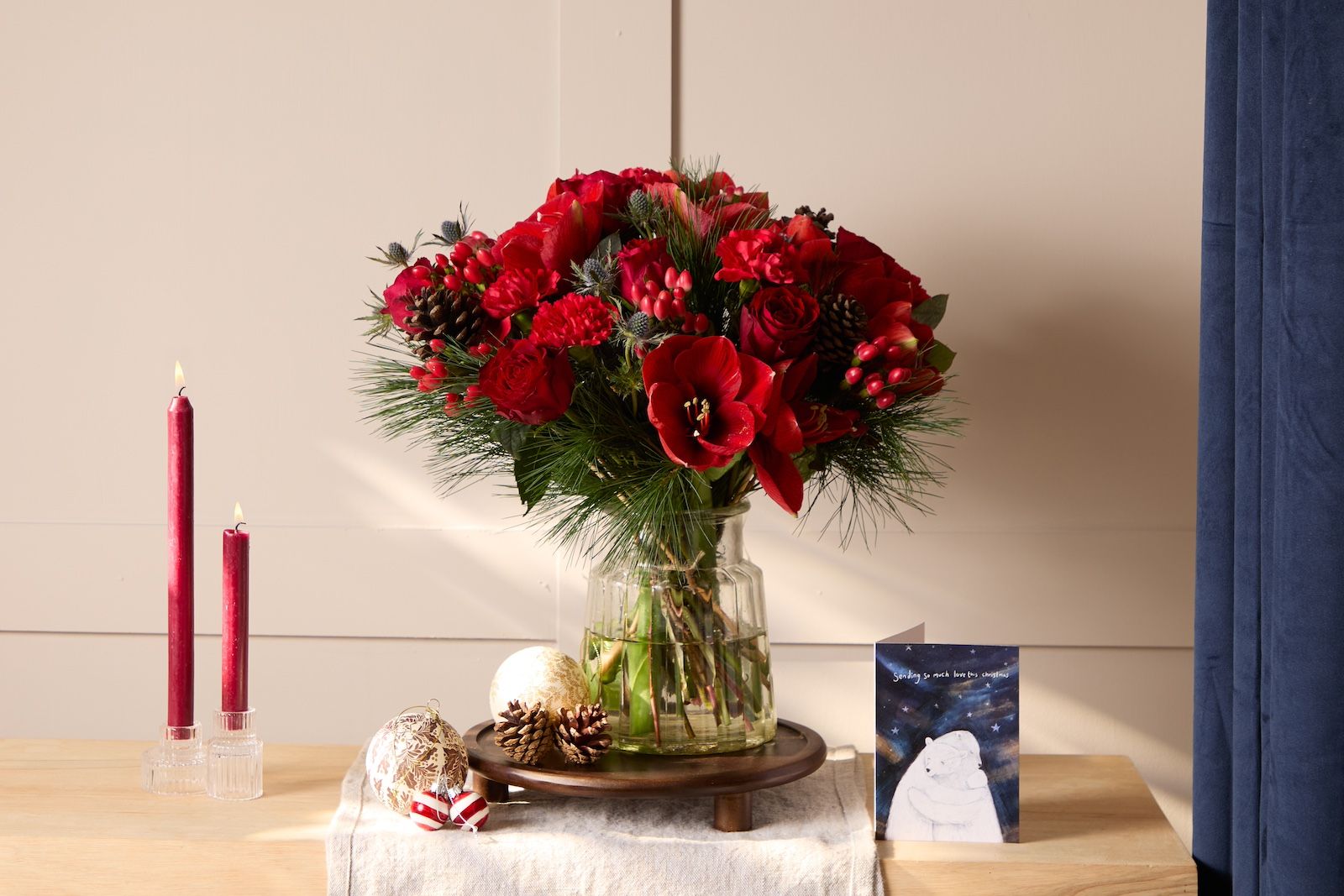
Though this beautiful bloom favours warm weather and sunshine, it has come to be associated with Christmas in the UK thanks to its late flowering period. Blooming from the end of Autumn through to the festive season, and often in shades of red and white, it is regularly featured in Christmas flower bouquets – our florists love using it as the centrepiece to our seasonal arrangements. It even has a suitably festive name – amaryllis comes from the Greek ‘amarullis’, which means ‘to sparkle’. Find out more about the symbolism and gifting traditions of this beautiful bloom in our complete guide to amaryllis.
Holly and ivy
With the Christmas carol ‘The Holly and the Ivy’, plus the festive classic ‘Deck the Halls’, it’s little wonder these evergreen plants are associated with the festive season. However, their connection with this time of the year began long before the concept of Christmas itself.
Surviving church records from the late Middle Ages suggest these plants were used to decorate religious buildings during the winter months – as evergreen plants, they were associated with eternal life, and were considered to be good luck. In fact, the holly tree was formally known as the Christmas tree, before the Victorians introduced the traditional festive fir we know and love today. Today, holly and ivy make for classic Christmas decorations, with the dark glossy greens and red holly berries inspiring the traditional festive colour palette.
Mistletoe
Though its long been associated with love and romance, mistletoe is actually a parasitic plant that attaches itself to trees and other plants to survive. Its elegant white berries, which appear during the winter months, are also poisonous to humans. So how did it earn such positive connotations? As with many traditions, the origins are a little murky. In Norse mythology, the legend told that the god Baldur was killed by an arrow made of mistletoe. Upon his death, his mother the goddess Frigg wept tears that became the plant’s white berries, and so she declared it a symbol of love and peace, and said she would kiss anyone who passed beneath it.
Another origin story is the plant’s association with fertility and life – as an evergreen plant, it stands out against the stark branches of its host tree during the winter months, looking luscious and green in contrast, and the Druids saw it as a sacred symbol of virality. There is also a connection to ‘kissing boughs’, a decoration that has evolved over the years. Beginning as a holly bough in the Middle Ages, this transitioned to a hoop of evergreen foliage in the Tudor times, under which people were said to embrace. In the Georgian era, this evolved to kissing, with the tradition being that for every kiss, a berry must be removed from the mistletoe.
Poinsettia
Despite being known for their ruby hues, Poinsettias actually flower in a range of colours, from the classic festive red to pale yellow, pink and white. Native to Mexico, they get their name from Joel Roberts Poinsett, who was the United States’ first ambassador to the then newly-born Mexico from 1825 to 1829. He admired the plant on his first visit to the country and sent them back to friends in the United States.
Its link to Christmas, however, comes from a Mexican legend – the story goes that a young girl wanted to leave a gift for baby Jesus at her church service on Christmas Eve, and so gathered a bouquet of weeds. After leaving the present at the church’s nativity scene, the weeds transformed into bright red flowers, which became known as ‘Flowers of the Holy Night’. Another reason Poinsettias are associated with Christmas is because of their religious connotations, with its star shape said to represent the Star of Bethlehem and its red hue the colour of Jesus’s blood.
Hellebore
Hellebore is a beautiful flower that blooms in the dead of winter, bringing colour and joy at a time when much of nature has died back. Its late flowering period is key to its symbolism – this little plant is twinned with messages of hope, rebirth and triumph in the face of adversity, in a nod to its ability to bloom in frosty conditions (it’s even known to peek through snow). The white Hellebore, Helleborus niger, is also known as the Christmas rose, and is a beautiful gift to give at Christmastime.
Roses
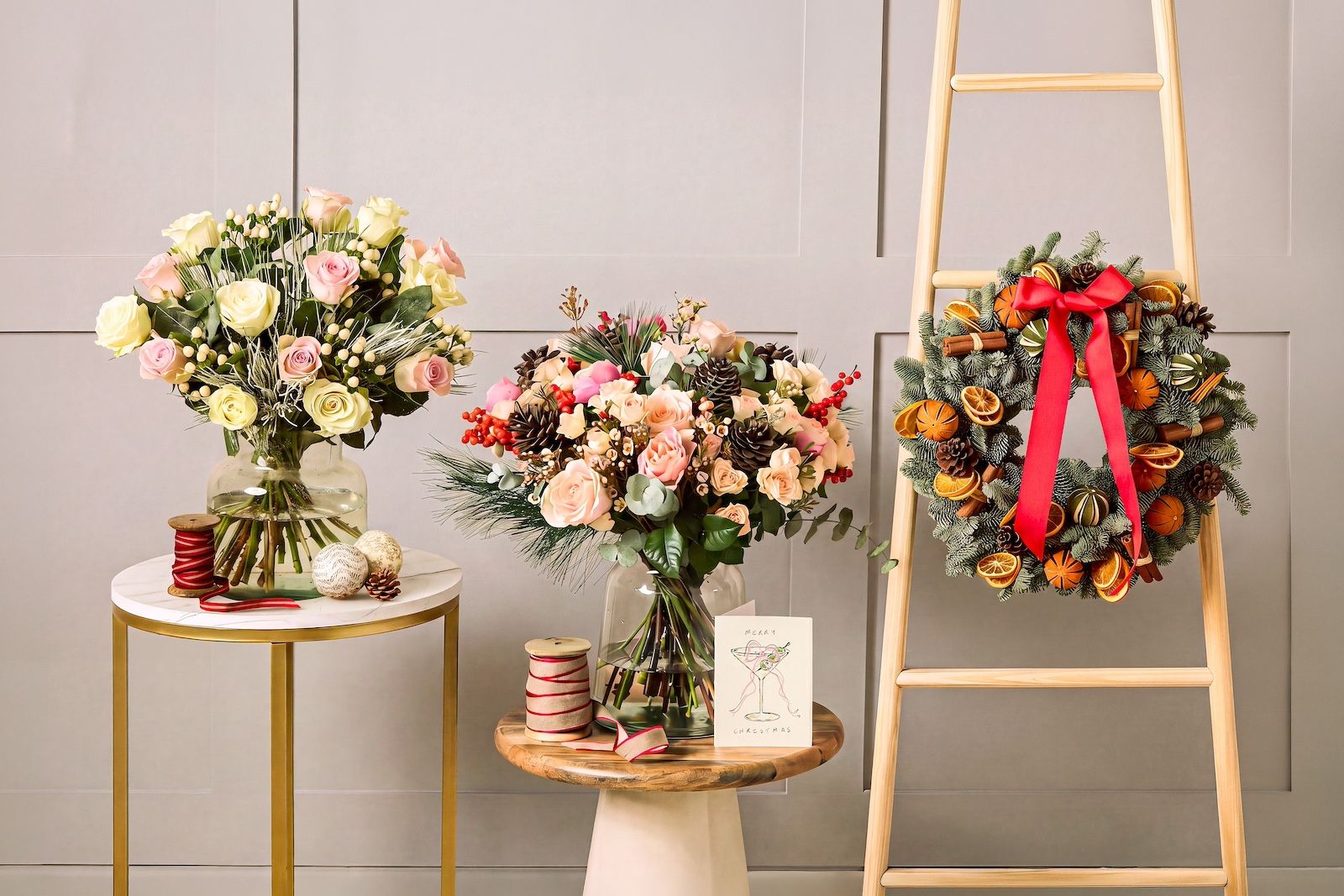
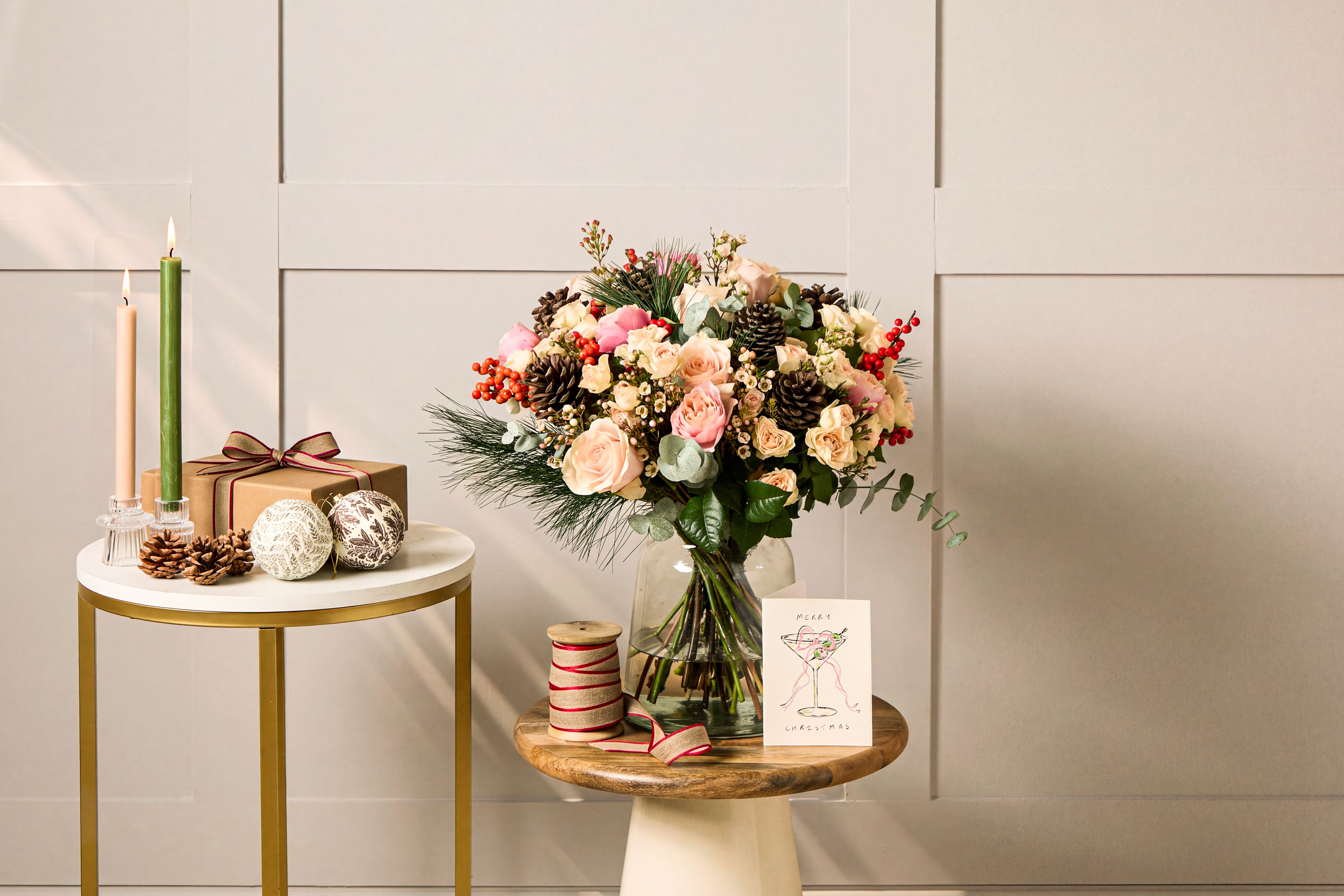
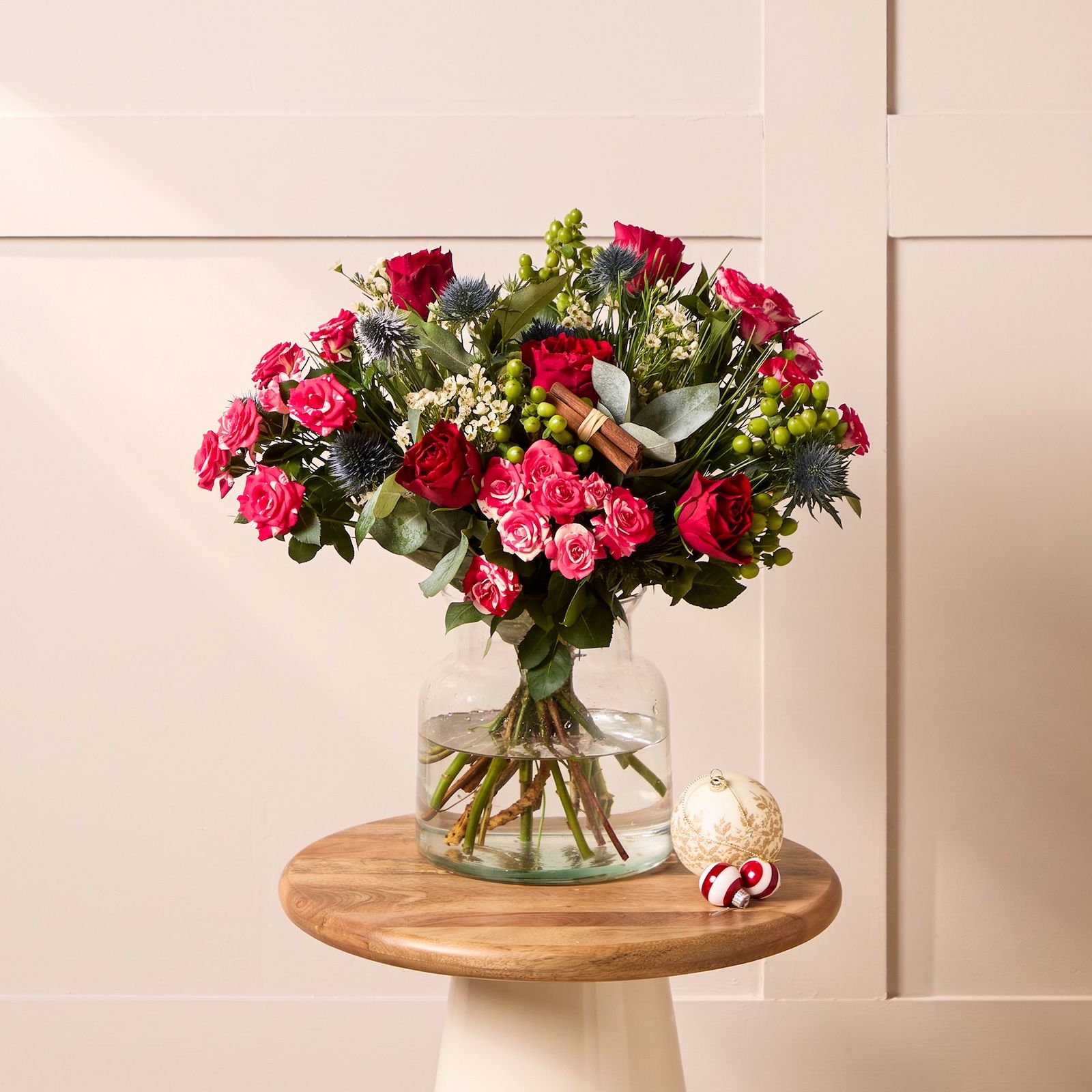
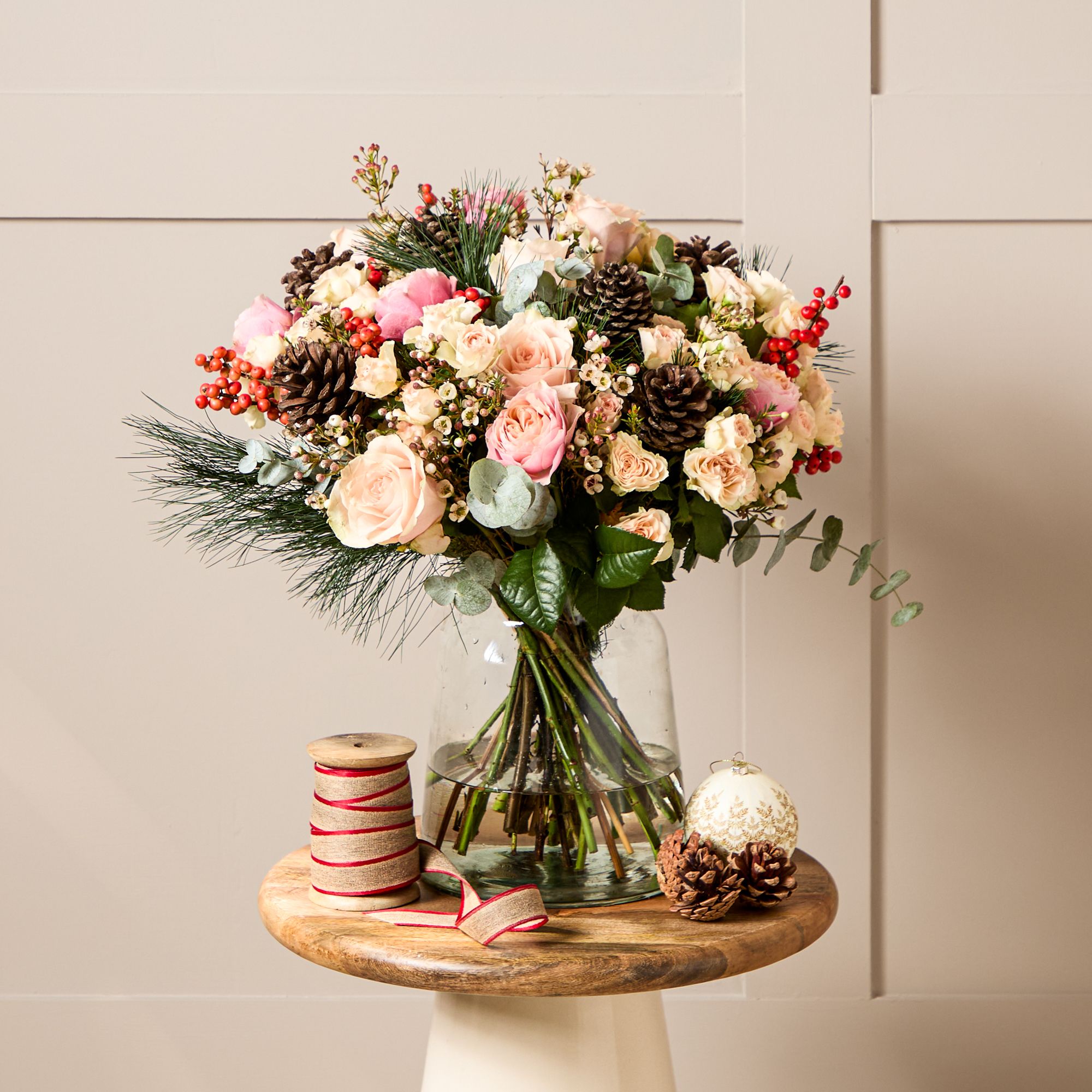
It’s hard to find an occasion for which the rose wouldn’t be a suitable gift. Though it’s not specifically a Christmas flower, it is often at the centre of many festive bouquets, thanks to its beautiful petals, choice of festive hues and its well-known symbolism. Sending messages of romance, love and friendship, it’s a fitting bloom to gift for an occasion so commonly twinned with togetherness – read our complete guide to roses for more. In our Christmas collection, you’ll find roses in traditional festive reds and whites, as well as softer hues of pink, peach and purple. The perfect gift at Christmastime.
Explore our Christmas collection

By Ellen Millard